Future Computer Scientist & AI Engineer Summer Programme
Explore computer science and AI through hands-on coding, building intelligent systems and solving real-world technology challenges.
See what the experience is like
From idea to prototype
Could you train an AI model, build a working app and demo it to a room full of tech professionals, all before you leave school?
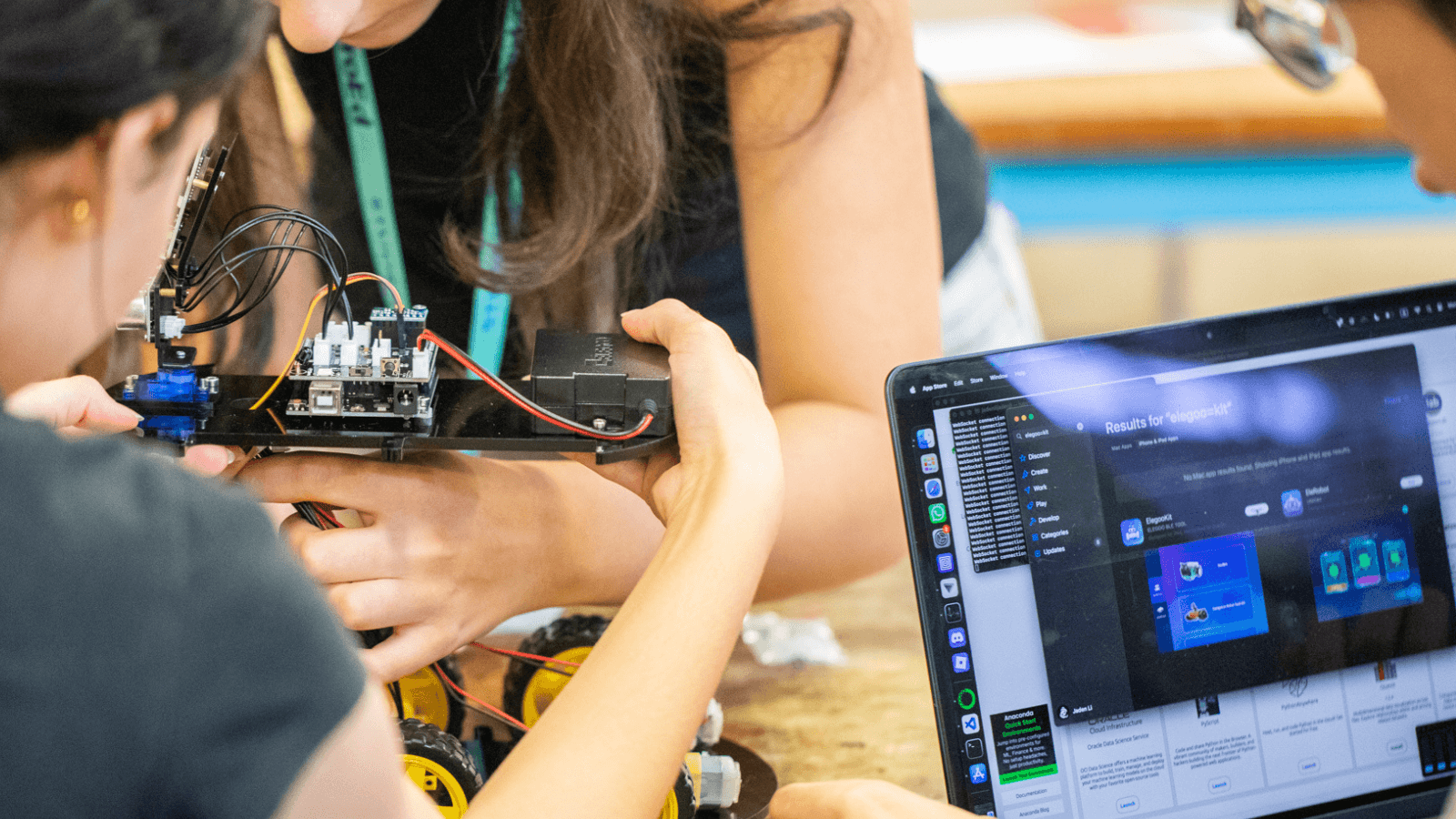
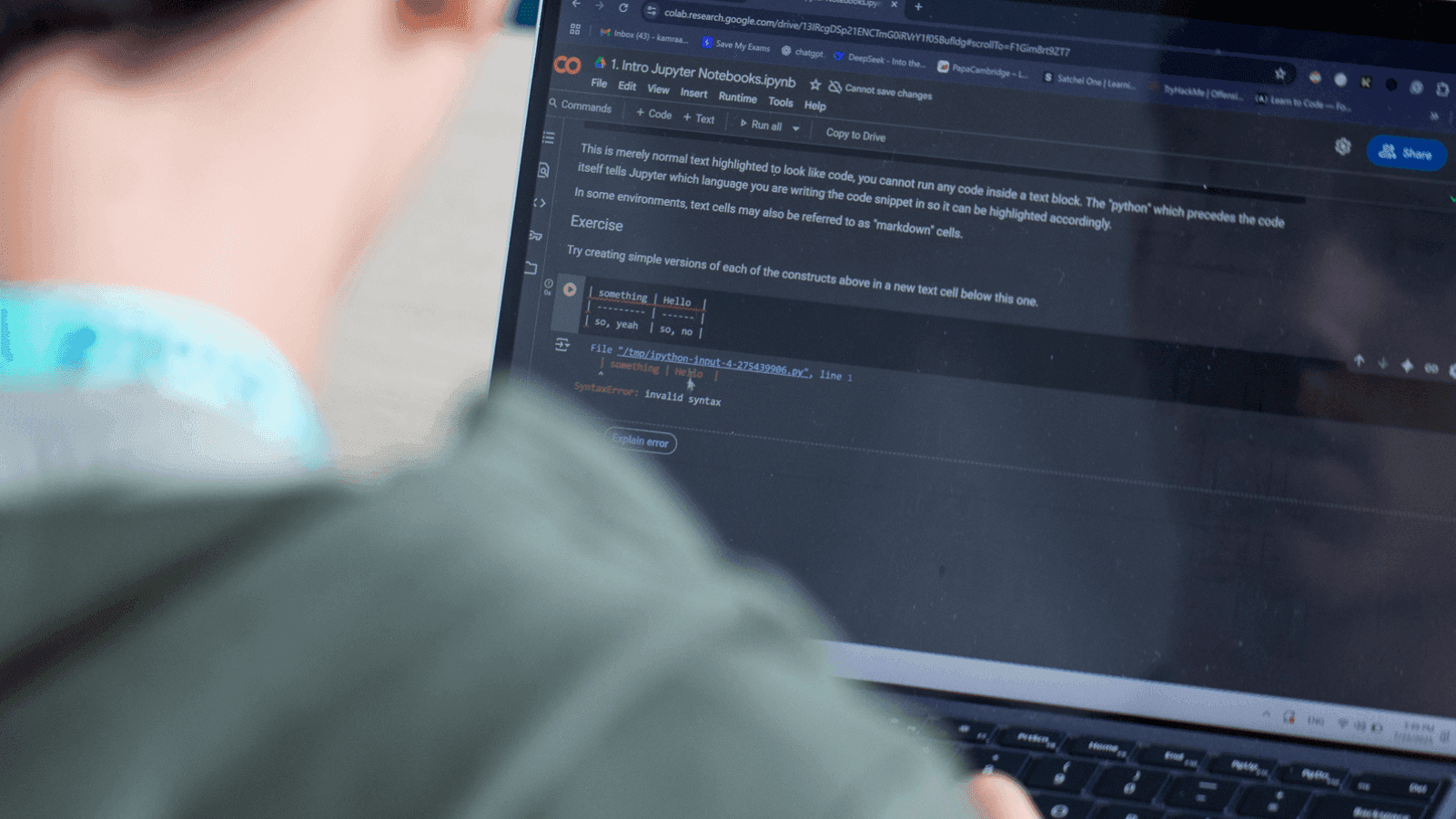
Over two weeks at Imperial College London, you'll work alongside software engineers, AI researchers, and data scientists to write real code and build working systems. You'll code in Python, train machine learning models, experiment with large language models, build computer vision systems and take on a full-day hackathon where your team uses the same AI-powered development tools as professional engineers to design, build and demo a working application under the clock. You'll visit a leading technology company to see how software and AI products are built and shipped by the people who make them. Every session is delivered by working professionals.
The programme concludes with the ProEd Field Project, a group research project designed to strengthen university applications, presented to external professionals. You leave with a ProEd certificate, a written Field Project report, professional panel feedback and a portfolio of code you built yourself.
Key highlights
Code with Python
Build practical coding skills with Python, progressing from programming fundamentals to data analysis and AI.
Explore AI & machine learning
Work with machine learning, computer vision, natural language processing and large language models through hands-on workshops.
Build with the latest AI tools
Explore how modern AI systems work, from LLMs and multimodal models to tool-augmented and agentic AI.
Put your skills to the test
Bring your learning together in a hands-on hackathon, applying your coding and AI skills to build and develop a working solution.
Programme timetable
Timetable is a guide only and may be subject to change.
Think like an engineer / programmer
- Work alongside a practising engineer to learn the design process: scope, sketch, prototype, test, iterate
- Build something, break it, understand why it failed and redesign it
- Tour a working engineering facility at Imperial College London
- Structured sketching and visual communication workshop led by industry professionals
Build, code, compute
- Design, construct and test a working prototype with real engineering materials
- Learn to code in Python with a working technologist and build something that works by the end of the day
- Combine physical construction with computational analysis in a team challenge
- Explore 3D printing and digital fabrication tools used in professional engineering
Where hardware meets software
- Design a physical system AND write the code that controls it, guided by professionals who do this for a living
- Work with sensors, actuators and microcontrollers to bridge the physical and digital
- Investigate a real-world engineering failure caused by a hardware-software integration problem
- Debate: as systems become more autonomous, who is responsible when they fail?
Code that thinks
- Build a working data analysis tool alongside a practising AI researcher
- Train your first machine learning model and understand why it gets things wrong
- Build a simple image recognition system using industry-standard computer vision tools
Language, models and agents
- Build and experiment with a large language model with an AI professional who works with them daily
- Investigate agentic AI: systems that act autonomously and make decisions
- Build something that processes, generates or analyses human language
Inside a tech company
- Visit a London-based technology company
- Spend the day with working software engineers, data scientists and AI researchers
- See how technology products are designed, built, tested and shipped
Think like an engineer / programmer
- Work alongside a practising engineer to learn the design process: scope, sketch, prototype, test, iterate
- Build something, break it, understand why it failed and redesign it
- Tour a working engineering facility at Imperial College London
- Structured sketching and visual communication workshop led by industry professionals
Build, code, compute
- Design, construct and test a working prototype with real engineering materials
- Learn to code in Python with a working technologist and build something that works by the end of the day
- Combine physical construction with computational analysis in a team challenge
- Explore 3D printing and digital fabrication tools used in professional engineering
Where hardware meets software
- Design a physical system AND write the code that controls it, guided by professionals who do this for a living
- Work with sensors, actuators and microcontrollers to bridge the physical and digital
- Investigate a real-world engineering failure caused by a hardware-software integration problem
- Debate: as systems become more autonomous, who is responsible when they fail?
Code that thinks
- Build a working data analysis tool alongside a practising AI researcher
- Train your first machine learning model and understand why it gets things wrong
- Build a simple image recognition system using industry-standard computer vision tools
Language, models and agents
- Build and experiment with a large language model with an AI professional who works with them daily
- Investigate agentic AI: systems that act autonomously and make decisions
- Build something that processes, generates or analyses human language
Inside a tech company
- Visit a London-based technology company
- Spend the day with working software engineers, data scientists and AI researchers
- See how technology products are designed, built, tested and shipped
The ProEd Field Project
The programme concludes with the ProEd Field Project, where students bring together what they have learned across computer science, AI and system design to develop and present their own project.
Your research project
Develop a project that applies ideas from coding, data analysis, AI or system design. Students bring their work together in a written report and prepare to explain the thinking and technical decisions behind their project.
How it’s supervised
Develop the project with professional mentoring, with guidance on preparing the written report, rehearsing the presentation and getting ready to respond to questions from the panel.
Example: Develop a technology project using skills from Python, data analysis, AI or system design, then present the work and technical approach to a panel of external industry professionals for feedback.
Learn from industry professionals
Sara is a researcher specialising in planetary science, space exploration, and scientific software. She recently completed her PhD, jointly affiliated with the Natural History Museum London and Imperial College London, with research focused on instruments aboard the ExoMars 2028 Rosalind Franklin Rover.
Her work combines science and computing to better understand the surface of Mars, from studying how light interacts with matter to developing software for analysing data from planetary missions. She is also a member of the PanCam instrument team for ExoMars.
In 2021, Sara received the Institute of Physics Jocelyn Bell Burnell Medal and Prize for her work developing mission software. Her experience gives students a real-world perspective on how computer science, data, and software are used in scientific research and space exploration.
What's included
Included in the fee
Single room upgrade available at booking
Optional lunch vouchers can be booked for students attending all residential programmes. On-campus cafes and restaurants are available. However, they only accept payment cards and do not accept cash.
All day travel costs covered
Not included
Optional lunch vouchers can be booked for students attending all residential programmes. On-campus cafes and restaurants are available. However, they only accept payment cards and do not accept cash.
What past students say
From
Starts 12 Jul